Ceylon Vanilla
Ceylon Vanilla — Why It Tastes Like More
Key Takeaways
Real Ceylon vanilla from Sri Lanka has a flavour profile more complex than any other vanilla origin. It doesn't just taste like vanilla — it tastes like more.
Real Ceylon vanilla from Sri Lanka has a flavour profile more complex than any other vanilla origin. It doesn't just taste like vanilla — it tastes like more. Floral notes, gentle spice, a depth that synthetic vanillin cannot replicate.
What makes Ceylon vanilla special?
Not all vanilla is the same. The plant Vanilla planifolia grows in several tropical regions, but soil, climate, and curing methods determine the final product.
Sri Lanka has one of the world's oldest vanilla cultivation traditions. The island produces only about 1.5 tonnes of natural vanilla per year — against global demand exceeding 3,000 tonnes. What grows there is rare.
What sets it apart: Ceylon vanilla contains a higher proportion of secondary aroma compounds beyond vanillin (the primary flavour molecule) — including p-hydroxybenzaldehyde and vanillic acid. These compounds create the floral and spicy notes that distinguish Ceylon vanilla from Madagascar vanilla.
The comparison
| Property | Ceylon Vanilla (Sri Lanka) | Bourbon Vanilla (Madagascar) | Synthetic Vanillin |
|---|---|---|---|
| Flavour profile | Complex: floral, spicy, woody | Creamy, sweet, round | One-dimensional sweet |
| Vanillin content | Medium to high | High | 100% vanillin |
| Secondary aromas | High | Medium | None |
| Production/year | ~1.5 tonnes | ~2,000 tonnes | Unlimited (synthetic) |
| Price | Premium | Premium | Low |
Why no extract can compete
Synthetic vanillin is made from lignin (wood waste) or guaiacol (petrochemical). It contains exactly one flavour compound: vanillin. Real vanilla contains over 200 different aroma compounds.
That's the difference between a single note and a chord. Synthetic vanillin sounds like vanilla. Real vanilla sounds like music.
The most labour-intensive spice in the world
Every vanilla flower must be hand-pollinated — within a window of just a few hours. The pods ripen for 9 months on the vine. Then come weeks of curing: blanching, sweating, drying, conditioning.
In Sri Lanka, this happens in small operations, not industrial facilities. The farmers know their plants individually.
Rare. Intense. Real.
Ceylon vanilla isn't better vanillin. It's a different product — more complex, rarer, handmade. Once you've used real Ceylon vanilla in yoghurt, ice cream, or baking, you understand the difference.
The vanilla that tastes like more. Coming to PONDI. Real. From Paradise.
FAQ
Ceylon vanilla from Sri Lanka has a more complex flavour profile with floral, spicy, and slightly woody notes. Madagascar vanilla (Bourbon vanilla) is creamier and more one-dimensional. Both are real vanilla — but Ceylon vanilla is rarer and contains a higher proportion of secondary aroma compounds beyond vanillin.
Vanilla is the most labour-intensive spice in the world. Each flower must be hand-pollinated, the pods ripen for 9 months on the vine, and the curing process takes additional months. Sri Lanka produces only about 1.5 tonnes per year — global demand exceeds 3,000 tonnes.
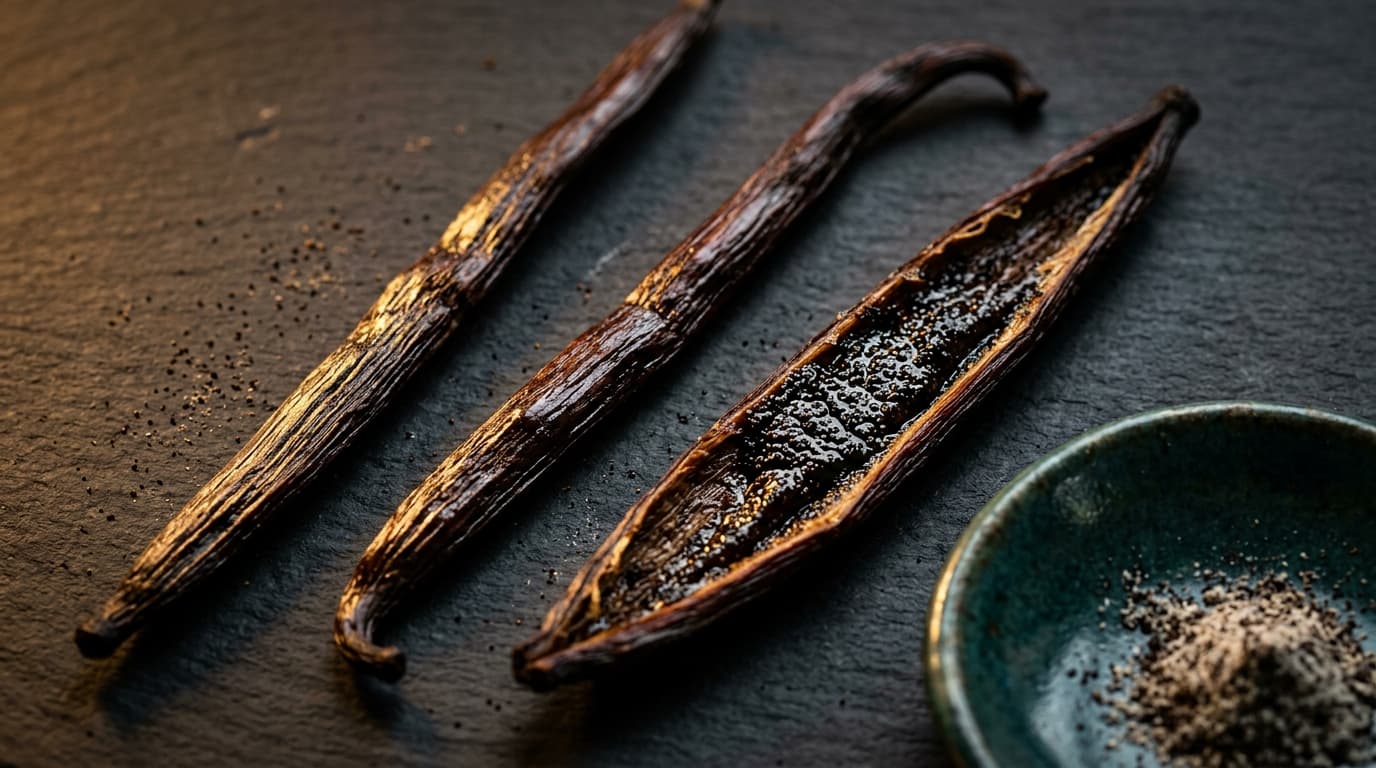
Real vanilla pods are dark brown to black, pliable, and slightly oily. They smell intensely aromatic — not just sweet, but also floral and spicy. Synthetic vanillin smells one-dimensionally sweet. On ingredient lists, real vanilla reads 'vanilla' or 'vanilla extract', not 'vanillin' or 'vanilla flavouring'.
PONDI
Editorial
PONDI brings King Coconut Water and Ceylon Vanilla from Sri Lanka to Germany — researched, verified, straight from the island.
Read More
New posts delivered to your inbox
No spam. Just knowledge.